
Purchasing your violin
The right instrument turns practice into a joy. Here's how to choose a violin your child will love to play — and the common mistakes to avoid.
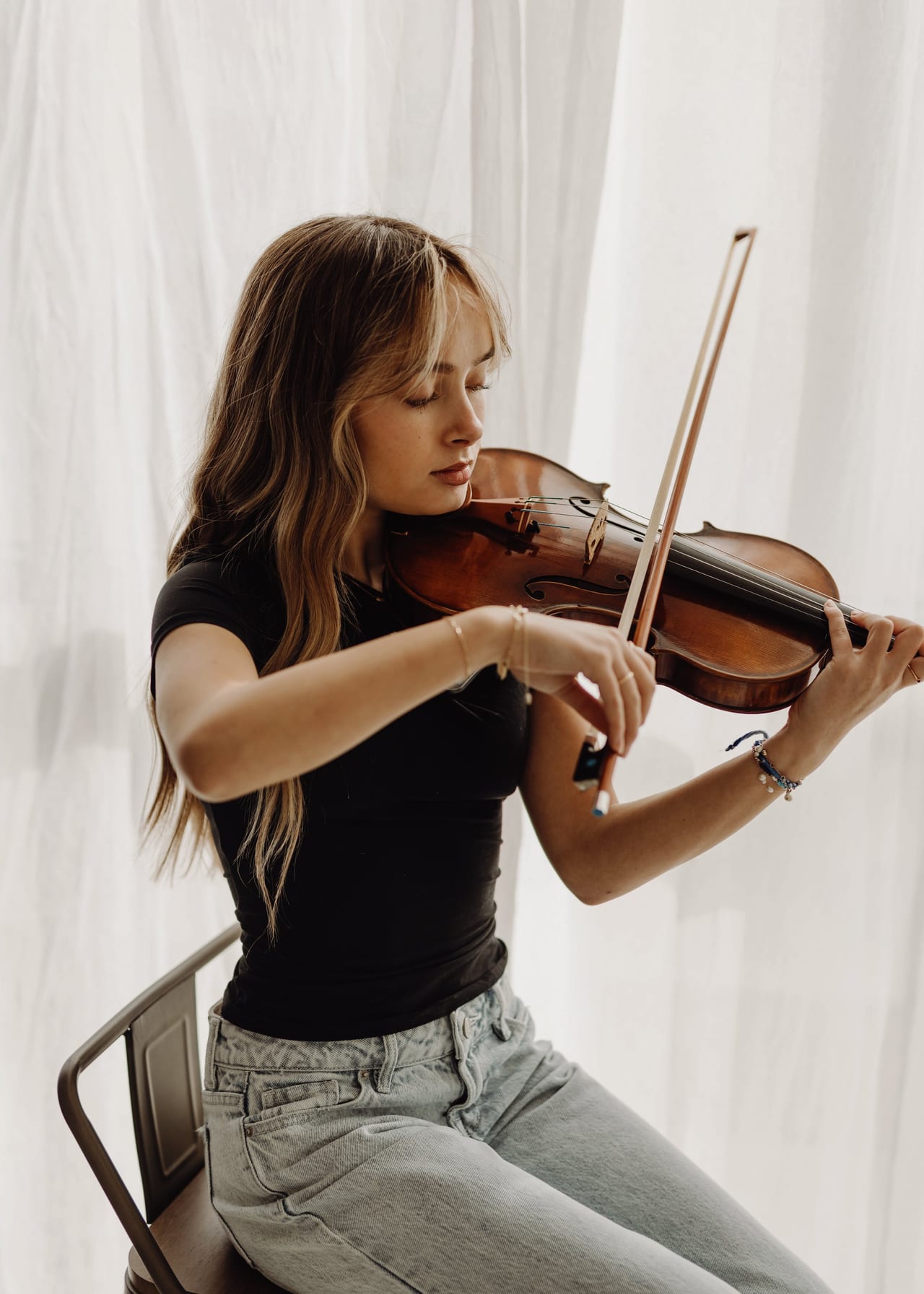
A good violin makes learning a joy
A properly made and set-up violin is the difference between a child who loves to practice and one who gets frustrated and gives up. A good instrument holds its tune, is comfortable to hold, and actually sounds like a violin — so progress feels rewarding from the very first lesson. A poor one fights the player at every step.
Start small — from 1/32 and up
Violins come in fractional sizes. The youngest beginners — some as young as 3 — start on a 1/32 or 1/16 violin and move up as they grow, all the way to a full 4/4. The right size matters: an instrument that's too big strains small arms and hands and makes good technique impossible. Kate will help you measure your child and pick the right size.
Beware the "violin-shaped object"
Please don't buy the cheap violins sold on Amazon or in big-box stores. Teachers call them "violin-shaped objects" (VSOs) for good reason — they look like violins but often can't be tuned, have warped bridges and plastic parts, and arrive nearly unplayable. They hold students back, usually can't be properly repaired or adjusted, and a bargain that frustrates your child is no bargain at all.
- ✗{{ p }}
- ✓{{ p }}
We recommend Adam Day Violins
Buy or rent from a reputable violin shop — not a general retailer. Adam Day Violins is our go-to: real, properly set-up student instruments, expert help choosing the right size, and rental and trade-up programs so you can size up affordably as your child grows. A good shop sets the instrument up before it reaches you and stands behind it.
Quality student violins, properly set up, with rentals and trade-ups as your child grows.
Visit Adam Day Violins →A proper setup includes…
Book a trial lesson and we'll help you find the right size and a violin your child will love.
Book a trial lesson →